Concepts do many things at once, but men do much the same thing as their fellows
Chapter3: The Coming of the Other, Plough, Sword and Book – Ernest Gellner
cahiers de doléances
Concepts do many things at once, but men do much the same thing as their fellows
Chapter3: The Coming of the Other, Plough, Sword and Book – Ernest Gellner
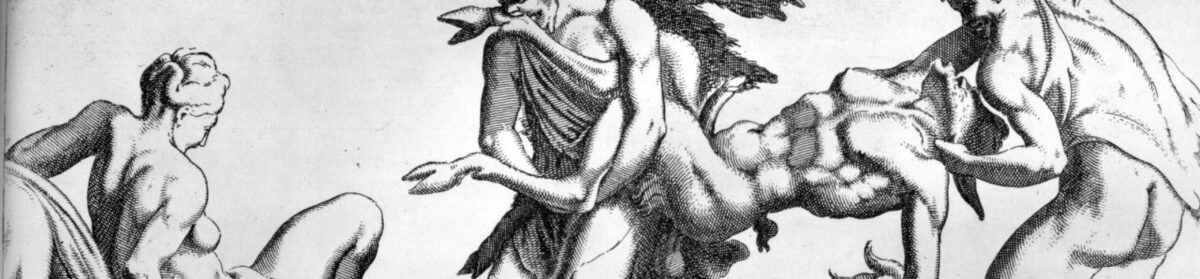
An independent image that stalks into the world like a new monster
Frank Auerbach

And in those voices there was a gloomy desire for vengeance…
The Twenty Days of Turin, A Novel – Giorgio de Maria

Though inadvertently here at the height of the tulip season, an international event it turns out. Thousands of ‘tulip fuckers’ descending by the coachload on the Keukenhof.
As an old and highly respected university town, it is a pleasing mix of the tranquil and studious, and bustling and young – pleasing to me anyway. Can’t do anything about dutch food of course other than lean into it and have bitterballen in a brown bar drinking Texel.


This last, Rembrandt’s school.
Reading Plough, Sword and Book by Ernest Gellner, I enjoyed the ‘matrix’ of conflict and agreement between rationality or the observed world and maintaining the social norm in ‘pre-rational’ societies – societies of the plough in the framework of the book.
This situation is of course very far from being confined to those societies and the immediate contemporary and everday analogue is that of the CEO or political leader.
Business leaders, good ones, bad ones, set the allowable perception, speech and activity framework of their businesses, as do political leaders their parties.
It is very difficult to do anything outside how the CEO wishes to act of course.
I don’t think people always get the extended consequences of this, which is that organisations are very much in the sway of and shaped by the leadership. In fact even business leaders I have known don’t always get this very well. They don’t understand why their teams won’t tell them things. You can of course brute force these things with data, most of the time, and if the CEO has any sense of rational decision making. But those leaders can certainly make things difficult, asking for more information, for more data. In fact, even in a data driven environment, it’s perfectly possible to avoid having to make decisions you don’t want to make.
Leaders will often get frustrated that people haven’t told them things, or that a thing is done persistently badly, not realising that it is they who are responsible and have in fact created that effect.
One is rendered powerless in such an environment, if the leader is bad. Some of this at least may account for classic problems of managerial competence, in football say. Why is it that such and such a manager can excel at one club and fail at another? A lot of the time it will be about enabling the teams, but equally, the situation in hand can sit athwart the approach of the leader. Any given leader is not suited to every given environment.
And good leadership probably looks different in every environment – not to say that there aren’t good things that leadership consistently does, but its actions and its effect will be different.
Bad managers, however, are remarkably consistently bad, an observation I had cause to make when considering a job offer a former, very not good, manager of mine had made me in a very different industry, and indeed in a different country.
It was astonishing to see both at a board level and at a team level, the same dissatisfactions and problems that I had known under this manager before. What made it doubly remarkable was that these problems and dissatisfactions were not perceived to have any sort of locus around this particular manager.
This is in fact common in my view – the high priest element can mean that it is hard to even perceive that it is they who have agency in this situation, they who are the locus of control.
So organisations and teams struggle and grapple with a problem that’s hard to define, and all sorts of time wasting activities take place to try and solve a problem that is in fact to do with the leader or manager.
It is also true that this is a necessary quality even in good leaders, since they must sometimes make things happen through sheer force of will, and in fact this is why they have been selected. They will need to be able to bring people along with them, even those people aren’t always convinced, and ensure that organisational goals and incentives are aligned to deliver those outcomes.


living no sort of quality of intellectual life at the moment but food doesn’t care about that. as more than one person has said boiled beef and carrots is about the closest you get to something pot-au-feu in food from this archipelago. as long as you take care over the broth and skim during its cooking.
this isn’t quite as clear as i’d like but the flavour is a+. the brisket, the sweetness of the carrots and the dijon with it, the most simple basic elements tied together by the broth.
it is of course asparagus season and i will *definitely* do a hollandaise. next time. for the moment butter and lemon and salt
cannelloni was very successful! and the asparagus is making an appearance in the market. green barley risotto with peas and asparagus was the consequence. no other photos of an actual life lived ofc.
oh and an extremely successful pommes boulangères – the best thing I’ve eaten this year I think?


a reflection so forceful at the centre of oneself that it feels sententious
The dim sea glints chill. The white sun is shy.
And the skeleton weeds and the never-dry
Rough, long grasses keep white with frost
At the hilltop by the finger-post;
The smoke of the traveller’s-joy is puffed
Over hawthorn berry and hazel tuft.I read the sign. Which way shall I go?
A voice says: You would not have doubted so
At twenty. Another voice gentle with scorn
Says: At twenty you wished you had never been bornEdward Thomas – The Signpost
Ah well, I remember walking in the dark up the incline by the mill and thinking aged 17 ‘if it all stopped now I would be ok with that.’ A nonsense. But a nonsense I still feel.
Reading Robert Southwell’s Humble Supplication and its language is surgically applicable to our days:
Yet when they see your Soueraigne stile soe abused to th’authorizing of Fictions, that the Magistrates of your whole Realme, must generally soothe* things soe directly disproved by common sence, and contrary to their own and all mens knowledg, it cannot but be a torment to their Christian mynds…*_soothe_. ‘To maintain or put forward a lie as being true’
Braudel from his Grammaires des Civilisations describes significant elements comprising the heavily used notion of ‘civilisation’:
La notion de civilisation, en effet, et au moins double. Elle désigne, à la fois, des valeurs morales et des valeurs matérielles.
And perhaps it is true that these go together. That is after all the argument of capitalism. In a discussion with a Marxist recently – fwiw I consider myself a part-time Marxist, the universally and correctly despised Laodicean in other words – that good Marxist said that people did not know what was good for them and needed instructing, a sentiment that increasingly I despise – telling people what they actually want is a disgusting habit, like telling people what they should like or enjoy. still, activities need to be co-ordinated to be able to live together.
Listening? Saw Avalon Emerson who was fantastic actually:
Johnny Blue Skies and the Dark Clouds is an immensely entertaining album:
he’s right to channel that ’70s sex-funk country style to tackle the current conjuncture, the US problem seems intensely psychosexual actually Matty Y
Something people don’t talk about so much these days is that in post-WW2 America, people took Freudian psychoanalysis very seriously for some reason.
— Matthew Yglesias (@mattyglesias) April 3, 2026